


If you've ever experienced a cat's abrupt behavioral change from cuddling and sweet to hissing and clawing, you likely have wondered about the root cause. What is driving these behavioral changes? This sudden shift can be surprising and confusing for some cat parents. You might even have asked yourself, can cats have schizophrenia?
In people, schizophrenia is a mental disorder that causes problems in a person's relationship between thought, emotion and behavior, leading to apparent shifts in personalities, violent behavior when threatened and hallucinations. But, can cats be schizophrenic? Read on to learn whether cats can have schizophrenia or if their behavior is indicative of something else.
Can Cats Have Schizophrenia?
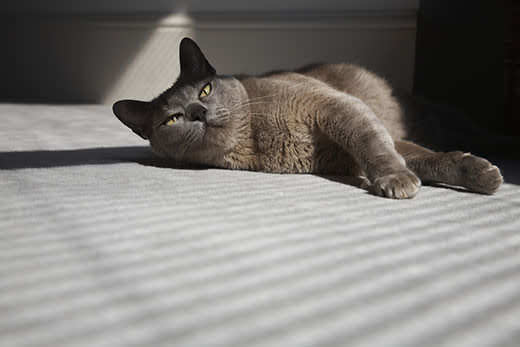
If you've spent any time around furry feline friends, you know that sometimes their cat behavior may warrant a visit to Google and in some cases, you may be tempted to search, "Can cats be schizophrenic?" Cats can sometimes appear to have rapid shifts in their personalities, from friendly and purring to aggressive and biting. They can also freeze and stare blankly at walls or ceilings. However, there are no studies or research that proves cats have schizophrenia; we simply cannot get inside their minds enough to know.
But, there is an unexplained disorder in cats called feline hyperesthesia syndrome (FHS) that can mimic a lot of the signs of schizophrenia. For example:
- FHS can affect both male and female cats equally, and it usually starts early in life.
- FHS can cause cats to abruptly shift from happy to upset without apparent provocation.
- Cats with FHS can display freezing behavior.
- Genetics seem to be at play in both human schizophrenics and cats with FHS. While FHS can be seen in all cat breeds, the Siamese, Abyssinian, Burmese and Himalayan breeds appear to be predisposed to FHS.
- FHS may also be a seizure disorder in cats.
No one knows what causes FHS in cats. FHS could be a behavioral problem, seizure disorder or sensory neuropathy that causes the cat pain, or it could be a combination of all three. What is known is that cats who are nervous or irritable seem to be at higher risk for FHS.
Clinical Signs of Feline Hyperesthesia Syndrome
In addition to the behaviors listed above, a cat may be suffering from FHS if the following clinical signs are displayed, especially after petting a cat with FHS:
- Episodes of skin twitching down the back
- Skin twitching accompanied by violent tail swishing
- Unexpected growling or aggressive vocalization
- Dilated pupils
- Sudden unprovoked attacks
In between episodes, a cat with FHS appears completely fine, and physical examination of the cat by a veterinarian is usually normal. FHS is treated by minimizing the cat's stress in the household as stress tends to trigger episodes. Environmental enrichment is often enough by itself to successfully reduce episodes, according to the Drake Center for Veterinary Care. In severe cases, several medications have been used successfully by vets to treat FHS, including gabapentin, SSRIs like fluoxetine, tricyclic antidepressants, benzodiazepines and anti-seizure medications. Your vet will be your best resource to determine the best treatment for your cat.


Tasty Tips
Behaviors Mistaken for FHS in Cats
Other medical conditions can be confused for FHS, and if you don't know what's going on, you might find yourself asking, "Can cats have schizophrenia in some way?" Here is a short list of medical conditions that can mimic the signs of FHS or seeming schizophrenia in cats:
- Redirected aggression: Cats can seem to explode with aggression or become more irritable for no clear reason, but it could be redirected aggression. Common in cats, redirected aggression is when a cat sees, smells or hears something scary or over-stimulating, and as a result, the cat redirects their frustration, aggression or fear onto whoever is closest, as noted by the International Association of Animal Behavior Consultants.
- Skin disease: Anything that causes a cat to be itchy, like fleas, mites, ringworm or allergies, can cause skin rippling and irritability that can mimic the signs of FHS.
- Back pain: Anything that causes back pain, including arthritis, bulging discs or other spinal disease, can appear to be FHS.
- Hyperthyroidism: Hyperthyroidism is a hormonal condition in cats that causes abnormally high levels of thyroid hormone. This causes behavioral changes in cats, including yowling, pacing, increased aggression, rippling skin along the back and changes in sleep and appetite that are similar to the signs of FHS in cats.
If you notice any changes in your cat that could potentially be feline hyperesthesia syndrome, or if your cat's behavior has you wondering can cats have schizophrenia, then it's time to call your local vet. They will be able to help you assess the situation, get your pet the treatment and relief they need, and hopefully spare your fingers and hands from grumpy claws and teeth!

Put your cat on a diet without them knowing
Our low calorie formula helps you control your cat's weight. It's packed with high-quality protein for building lean muscles, and made with purposeful ingredients for a flavorful, nutritious meal. Clinically proven antioxidants, Vitamin C+E, help promote a healthy immune system.